Showing posts with label Rhoda. Show all posts

Friday, October 17, 2014

What is an Idol?

Anything that is more important to you than God is an idol. Idols are sin, because God has said “You shall not make for yourself an idol” and “You shall have no other gods before Me.” And a lot of things can be idols. Even something like trying to fit in with the latest perceived trends in the home education sub-culture. Or maybe it’s a blog you’re constantly checking for new posts. Or having a perfectly clean room. Anything you give more attention to than God can be called an idol.

Idols are a lot of work. You have to make them, work for them, make time for them, carry them. No matter what your idol is, it’s probably taking up a great deal of your time.

On the other hand, if Jehovah is your God, then He carries you, cares for you, upholds you and blesses you. He supplies all your needs. He Himself has no needs.

Jesus carried all our sins (including idols) on the cross. He bore the wrath of God for our sin. All our guilt was on Him, and now we are innocent before God.

So I would encourage you today, to be sure that you have no idols and no other gods in our God’s sight. Wait on Him to execute judgement, and He will give you rest.


Love, Rhoda


Friday, August 15, 2014

What are Your Thoughts?

Rhoda’s family’s computer has had some problems, so she asked me to post this for her today. The following came from her blog, and you can read the original post here. I pray you will be encouraged just as I am!
–Esther

-  -  -  -  -  -  -  -

     This brief blog post is related to last week’s. I hope and pray that you have taken up my last challenge. Be warned: this one is even harder!

     Imagine that temple or building again.
     What if all your thoughts, were up there, every one of them written on your walls?
     I don’t mean those sneaky ones that flash through and you swiftly squash. Let me rephrase this a little. What do you mostly think about?
     When this challenge was given me, I realised, to my shame, that my thoughts were primarily things like what how wedding dress would look, or exactly how my latest house design would go. This really hurt me, and almost instantly I began to spend my thoughts on the Lord.

     For me, I didn’t have to consciously try to turn my thought around. Once I had been shown my error, God was swift in changing me. Now I strive to keep my mind pure.
     Perhaps this, for you, will require more effort in the beginning, but persevere in serving God with your thoughts! The Lord is our dwelling-place, and we can rest in His mercies. Psalm 18, verses 30-31:
     “As for God, His way is perfect;
     The word of the Lord is proven;
     He is a shield to all who trust in Him.
     For who is God, except the Lord?
     And who is a rock, except our God?”

-Rhoda

Friday, July 18, 2014

Changes

Some things don't change. Some things do.
People change. God doesn't.

The first thing to change is your heart. God does that - bringing you to life in Him.

After that, as Christians, we should be consciously striving to live holy lives. God is eternally changeless - so we look to the life of Christ to see what our lives should be like.

Are you, overall, changing to be more like Christ or more like the world? Moving towards godliness and wisdom or towards sinfulness and folly?
When you're making a choice, ask yourself "Is this changing me and the world around me for better or worse?".

We can't change everything. We shouldn't waste our energy trying to put an end to the annoying habits of family members. And we can't change things without His sustaining, keeping, guiding, strengthening hand of mercy.

Nevertheless, we must do our very best.

Change and decay in all around I see
O Thou Who changest not, abide with me. ~H.F. Lyte


Friday, June 20, 2014

Book Review: Do Hard Things, by Alex and Brett Harris

Title: Do Hard things: a teenage rebellion against low expectations.
Authors: Alex and Brett Harris
Publisher: Multnomah Books, 2008

So yes, I haven’t read that final biography of Charles Spurgeon yet :-)

"Most people don't expect you to understand what we're going to tell you in this book. And even if you understand, they don't expect you to care. And even if you care, they don't expect you to do anything about it. And even if you do something about it, they don't expect it to last. We do." - Alex and Brett Harris

This is one of my favourite books for young people! Do Hard Things is all about challenging the 'teens' in today's culture to see that there is more to life than friends and video games. Rather, the teen years are the "launching pad of life."

It's about what you do after you've become a Christian. Your heart has changed, and so must your life. 

There are five kinds of hard things:

  • Things that take you out of your comfort zone
  • Things that go above what is expected or required
  • Things that are too big to accomplish alone
  • Things that don't earn an immediate payoff
  • Things that challenge the cultural norm
I like this book because it is practical as well as being about the history of adolescence. There are a lot of books that talk about feelings, or relationships, but Alex and Brett have taken the challenge and written this one. They've also written Start Here, a follow-up book about how others are doing hard things, and just how you can get started and join them.

I think every Christian young adult should read this book, because that;s who it's written for - a whole generation willing to serve God above themselves.

Love,
Rhoda :-)


Friday, May 30, 2014

Book Review: Charles Spurgeon, by J C Carlile

Title: Charles Spurgeon: The Prince of Preachers
Author: J C Carlile (Abridged and edited by Dan Harmon)
Publisher: Barbour Publishing, 1997
Part of a series: Heroes of the Faith


This biography was quite refreshing to read after last month’s!


What I liked about this book:
  • It’s a pleasant and balanced story.
  • It moves easily and gives a good sense of the order of the main events of Spurgeon’s life, from his first sermon until his death at Menton, aged only 58.
  • It relates Spurgeon to the time in which he lived.
  • It also talks about his brother, a Congregationalist pastor.


I didn't like the ending, however.
“Let us turn to Spurgeon as our guide, following his determination and serenity of spirit.”
Let us rather turn to Jesus as the perfect example!


Recommended for someone wanting a shortish, neat, and peaceful biography of Charles Spurgeon.

One more book review next month, a book about Spurgeon's passion for doctrine. Mmm, me too. :-)


~I did not receive any compensation or reward for reviewing this book~

Tuesday, April 22, 2014

Book Review: The Prince of Preachers, by Christian Timothy George

Title: Charles Spurgeon - Prince of Preachers Author: Christian Timothy George Publisher: Christian Focus Publications Ltd, 2006
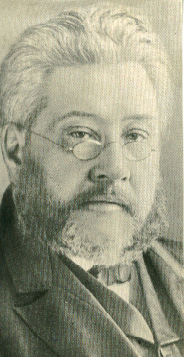
Charles Spurgeon preaching at the Surrey Music Hall


Charles Spurgeon was born in Essex, England, in 1834. He was converted at age fifteen and preached his first sermon the next year. He was a popular and able preacher of the Scripture and was compared to D.L. Moody, an American evangelist born in 1837.

Mr Spurgeon married Susannah Thompson in 1856. They had twin sons, Thomas and Charles.

Mr Spurgeon was a Baptist and a Calvinist. He frequently preached to crowds of more than 10,000. He also wrote many books, all of which have been very popular.

This biography is aimed at children aged 8-14. I took it from the bookshelf hoping to get a good, basic overview of Spurgeon’s life. I was quite disappointed.

The book incorrectly states the date of Spurgeon’s death. It also contains many errors in spelling and grammar. Another possible source of confusion for young readers is that it says that Spurgeon’s son Thomas was twelve years old in 1877, when in fact he was born in 1856. The reference to Thomas’ age is contained in a chapter headed "Sunday morning, 1877".  The rest of the book appears to be in plain chronological order. So either the maths is wrong, or the author wasn't paying attention to the order of his anecdotes.

Overall, this book seemed to be just a collection of exciting and emotional stories from the life of Charles Spurgeon. It even includes a legendary story about Queen Victoria disguising herself as a peasant in order to go and listen to Spurgeon preach.

I would recommend this book to someone wanting to read several interesting stories about Charles Spurgeon, and who doesn't mind imperfect grammar.
Me reading the book last night :-)

I plan to read another biography of Charles Spurgeon next week. Hopefully it will be both accurate and encouraging!


~I did not receive any compensation or reward for reviewing this book~

P.S. Sorry this is late--I (Esther) was gone over the weekend at a conference (and we got to meet Rhoda and her family at the same time!), so this sadly had to wait until I got home to be posted.


Saturday, March 22, 2014

Why I Love Doing the Dishes

     Each person in a home has their own job or chore.

     Mine is doing the dishes.

     One of the worst jobs, I used to think. Because no matter the time of day, the day of the week, no matter whether the day was busy or quiet, no matter the place in infinity, no matter how I feel - there are dishes to do!
     Thus, having the job of keeping up with the dishes of seven people may have helped me learning some responsibility. And although I am thankful for that, it’s not the reason I enjoy the chore.

     The reason is time.

“The kitchen sink” by Alan Cleaver is licensed under CC BY 2.0
     Time to think, reflect, consider, remember. Time when my hands are busy and my mind and heart are free to fly as they will. So they do.
     They fly through the memories of the day. Little memories and large memories. Sweet and bitter.
     Then, running over the memory, my mind considers.
     It draws its conclusions.
     And plans the future.

     Trying to look past my reflection in the window to see the stars at night, and past the soap spots to see the seagulls by day, my heart is singing.

     This is wonderful.

-Rhoda

Thursday, February 20, 2014

Why Your Blog is Like Your Life

     Good morning, friends!
     Since I’ve only just started writing for JOJ, I thought it would be good to tell you about


My philosophy of blogging

     First off, I’m talking about blogs like JOJ and my own blog. They are public blogs, not private blogs or public websites. I view blogs like ours as places on the internet where Person A publishes information and Person B reads it. It is a mainly an impersonal way of communicating with other people.
     I say impersonal because it is not in person. When Person A publishes a post, she does not know who will read it. Many of the Persons B who read the post will not know Person A personally.

“Underwood” by Ian Livesey is licensed under CC BY-NC 2.0
     Because I don’t know who is reading this post, I cannot tailor it perfectly. However, I have a good idea that most of you are unmarried Christian young ladies. :) If someone comments on this post, it may be only the first or second time I have come into contact with her. Thus, what she says may come across in a very different way from in that which she intended it! So, if you don’t understand what another young lady has said, either ask her what she meant, or leave it alone. Keep personal conversations, which are likely to contain misunderstandings, to emails.
     I’m not saying “Don’t post controversial stuff.” I’m saying, keep the controversial conversations/arguments which often follow to emails. Most bloggers have a contact page, so use that to keep the argument private.
     What you say on your blog is your view, maybe not mine. What I’m saying here is my view, maybe not yours. And sometimes it’s best to just walk away and leave people alone. We aren’t going to agree on everything!

     Because I don’t know who is reading this post, I don’t know how they understood it. I’ll never know who read it, who was encouraged by it, blessed by it, etc. (Unless you leave a comment telling me!)

God moves in a mysterious way,
His wonders to perform;
(read the rest here)

     Now to my second point:


Why your blog is like your life

     Because you never know who was watching! You don’t know who was reading your blog post, and you don’t know who was watching you hand out the crackers at morning tea on Sunday. You’ll never know who learned something from something you did. And that has two implications:
     First, you should always be on your best behaviour. Not the most important reason for doing that, but still it is one.
     Second, you should be on your best behaviour just in case someone is blessed by it. You never know what God will choose to use for anything!

     We never know what the next day will bring. We never know who has been encouraged by our blog. We never know who we have blessed by our lives. We don’t know so much - but


God knows everything.

     And He works all things for our good.
     Isn’t that worth praising Him for?

-Rhoda


Friday, January 17, 2014

An Inheritance We Must Not Forget

How many of you are home-educated? And how many of you have parents who were also home-educated?

The modern home-education movement was pioneered in New Zealand in the 1980s by the Smith family. In the USA, Michael and Debi Pearl decided to train their children at home in the 1970's. So the movement hasn't been going for more than four decades.

homeschool table by Jimmie / CC BY 2.0

And now a new generation is rising up - men and women who are blessed in that they have never darkened the door of a public school. They have been faithfully trained by Christian parents, learning alongside each other. These families are often not just home-educators - they are Biblical Christians changing their lives in other ways, seeking to conform to the whole counsel of God.

However, as the Botkin family explain in their documentary "Homeschool Dropouts," there are some very specific sins that we, the second generation, can fall into. I won't go into much detail here: you need to purchase your own copy of the movie!

But we can be too proud of our upbringing, thinking that we now know it all; that we don't necessarily need to keep our own children home; that school might not be quite so bad as we imagined it; that it really doesn't matter what we believe.

We are ignoring our inheritance!

We're not remembering the right things! We think that our parents did what was right at the time, and were simply trying to give us the best education available. And so we run the risk of ignoring our inheritance.

Our inheritance is this: that we are serving the Lord as whole households. Not as age-segregated groups learning either what we already know or do not need to learn, but learning through living a normal family life. It is a lifestyle of change, of casting off worldly presuppositions and turning to God's will in order to seek out the truth.

We must not forget the ways of our fore-fathers. That they have sought God's will and found the truth.


What more do we need?
-Rhoda